Inside UEFA: A 2026 Draw-Date Guide
The UEFA Champions League 2026/27 league phase draw is scheduled for Thursday, 27 August 2026, at 18:00 CET, with the competition beginning on Tuesday, 8 September UEFA will publish seedings, club gro...

Inside UEFA: A 2026 Draw-Date Guide
The UEFA Champions League 2026/27 league phase draw is scheduled for Thursday, 27 August 2026, at 18:00 CET, with the competition beginning on Tuesday, 8 September 2026. UEFA will publish seedings, club groupings, and the official draw procedure from 08:30 CET on draw day through its Champions League draw hub. The qualifying campaign runs from 7 July to 26 August, producing the final seven league-phase entrants after first, second, and third qualifying rounds plus the play-offs. Twenty-nine clubs qualify directly, while seven more advance through the qualifying route. For supporters in the United Kingdom, United States, Canada, and other international markets, the reliable approach is to verify the time-zone conversion and follow UEFA’s official updates rather than rely on unofficial social posts. Save the 27 August date, check the final participant list after the play-offs, and use the confirmed UEFA schedule before evaluating fixtures, travel, or responsible entertainment options.
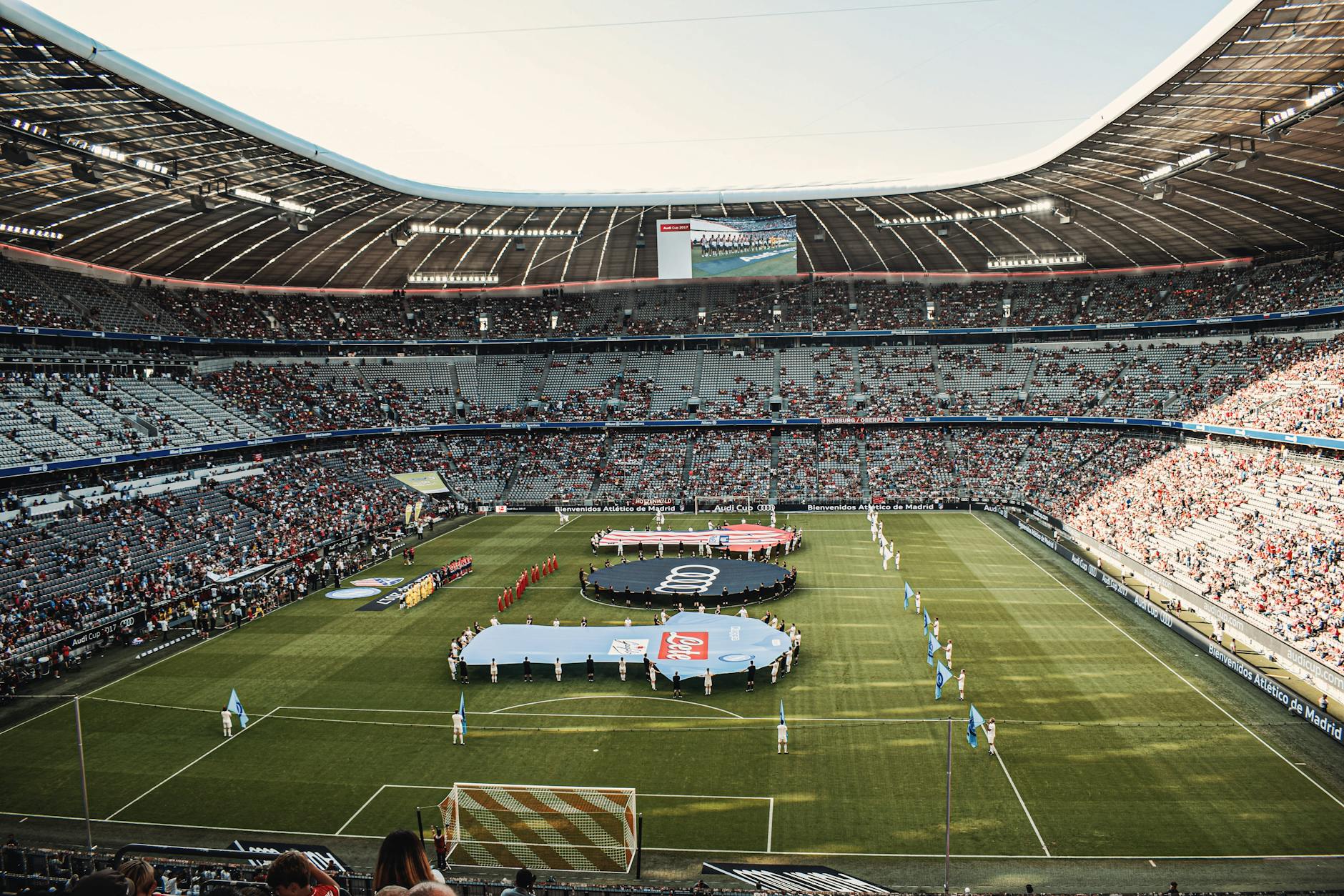
Photo by David Michael Bayliss on Pexels
Want the confirmed schedule and daily tournament context in one place? Goal Moments covers team tactics, player statistics, predictions, and the 2026 football calendar for fans worldwide.
The Quick Comparison
| Stage | 2026/27 date or window | What happens | Practical importance |
|---|---|---|---|
| First qualifying round draw | 16 June 2026 | Pairings are created for the opening qualifying ties | Begins the route for lower-ranked champions |
| Second qualifying round draw | 17 June 2026 | Champions Path and League Path pairings are set | Adds teams entering at the next stage |
| Third qualifying round draw | 20 July 2026 | Winners and entrants receive their next opponents | Determines the penultimate qualifying route |
| Play-off round draw | 3 August 2026 | Final qualifying pairings are confirmed | Decides the seven remaining league-phase places |
| League phase draw | 27 August 2026, 18:00 CET | Thirty-six clubs receive their league-phase opponents | The principal Champions League draw date |
| League phase begins | 8 September 2026 | Competitive league-phase fixtures start | First matchday of the main competition |
The central distinction is simple but frequently mishandled: the Champions League has several draw dates, not one universal event. UEFA’s official competition information states that the league phase contains 36 teams, including 29 direct qualifiers and seven qualifying winners, while the qualifying calendar determines which clubs occupy those final places. The UEFA Champions League draw page is therefore the controlling source for the 27 August event, whereas the UEFA qualifying competition information governs the earlier rounds. Mathematically, the probability of predicting a specific opponent before the pots and access list are final is lower than many social-media previews imply; any analysis published before the play-offs carries a structural uncertainty penalty. To learn how qualification paths affect club strength, see our [Internal Link: Champions League qualifying format guide].
Round 1: Which Champions League Draw Dates Matter First?
The first draw dates matter because they determine the chain of opponents that eventually produces the final seven league-phase participants. UEFA lists the first qualifying round draw for 16 June 2026, the second qualifying round draw for 17 June, the third qualifying round draw for 20 July, and the play-off round draw for 3 August. These are not decorative administrative milestones: each one changes the set of possible clubs in the next draw, the travel burden, and the expected competitive difficulty. The first qualifying round is played over 7/8 and 14/15 July; the second round follows on 21/22 and 28/29 July; the third round is scheduled for 4/5 and 11 August; and the play-offs take place on 18/19 and 25/26 August. The sequence creates a rolling information system, meaning that a club’s expected path becomes more precise after every tie.
A disciplined reader should track three variables at each stage:
- Entry point: whether a club starts in the first, second, or third qualifying round.
- Path classification: whether it belongs to the Champions Path or League Path.
- Coefficient position: whether seeding status offers protection from the strongest available opponents.
The Champions Path is reserved primarily for domestic league champions, while the League Path serves clubs qualifying through associations with multiple Champions League places. UEFA’s association club coefficient rankings influence entry and seeding. This is the first information-gain point often omitted by generic fixture pages: a draw date alone does not reveal a club’s true risk profile. The relevant calculation is conditional probability—what opponents remain possible after path restrictions and seeding—not the full list of all 36 eventual participants. Isn’t that the point of following the draw process rather than merely copying a final fixture graphic?

Photo by David Morris on Pexels
At the practical level, supporters should record the date, local time, and competition path in a single calendar. CET is the reference time used by UEFA in the published schedule, but a 18:00 CET event appears at 17:00 in London during standard winter time and at 17:00 BST in late August only after accounting for daylight-saving conventions; readers in New York, Los Angeles, Singapore, and Sydney must perform their own conversion carefully. The safest method is to use a time-zone converter on the day and confirm the broadcast notice from UEFA, because event platforms occasionally display a device’s local time incorrectly. Goal Moments can complement the official feed with tactical context, but it should not replace UEFA as the authority for a draw time or regulatory update. If your interest includes match predictions, separate confirmed facts from model assumptions, and never treat an early probability as a guaranteed outcome.
Round 2: How Does the 27 August League Phase Draw Work?
The 27 August 2026 league-phase draw assigns opponents to the 36 clubs entering the main stage, with UEFA scheduled to begin the event at 18:00 CET. The modern format is not the former four-team group-stage model: each club receives a league-phase schedule, and the draw uses pots, restrictions, and a controlled procedure to allocate opponents. UEFA is expected to publish the seedings, any groupings, and the detailed procedure from 08:30 CET on the same day, so definitive opponent probabilities should be calculated only after those materials appear. This is a critical distinction between a forecast and a result. Before the pots are published, a prediction model can estimate ranges; after publication, it can calculate the actual eligible-opponent set.
The operational workflow should be understood in four steps:
- Confirm the 36-team field, including the seven play-off winners.
- Review the pots and coefficient-based seeding, once UEFA publishes them.
- Apply association and draw restrictions, which can prevent certain pairings.
- Wait for the complete fixture release, because the draw may identify opponents before exact match dates and kick-off times are finalized.
The UEFA Champions League format overview provides useful historical context, but UEFA regulations remain the superior source for the 2026/27 procedure. A further information-gain insight is that “possible opponent” and “scheduled opponent” are different data states: one is a constrained sample space, while the other is a confirmed observation. Confusing them produces inflated certainty, especially in betting commentary. Goal Moments’ predictions should consequently be read alongside confirmed UEFA information, injury reports, squad registration news, and home-away scheduling details. Or am I wrong? No—the distinction is definitional.
The league phase begins on Tuesday, 8 September 2026, only 12 days after the scheduled draw. That compressed interval has analytical consequences. Clubs may still be integrating new signings, managing international workloads, and finalizing player registration, so a club-strength rating calculated on 27 August can materially differ from its rating on matchday. A responsible prediction framework should use a time-decay factor: assign greater weight to confirmed line-ups, recent competitive minutes, and official availability reports than to historical reputation. A simple model might weight current-season evidence at 60%, prior-season performance at 25%, and long-term club strength at 15%; those values are a transparent framework, not an official UEFA formula. Readers should never interpret a model output as certainty, particularly when using sports content in a gambling environment.
Want a clearer way to monitor the main event and the dates surrounding it? Use the official calendar first, then compare tactical analysis from Goal Moments.
Round 3: What Should Supporters Check After the Draw?
Supporters should check the official opponent list, fixture dates, kick-off times, venue assignments, broadcast availability, squad news, and travel requirements after the Champions League league-phase draw. The draw itself may answer “who plays whom,” but it may not immediately answer every operational question about when and where each match will occur. UEFA’s official competition pages and club announcements should be cross-checked before booking travel, purchasing hospitality, or forming a match prediction. The expected value of waiting is high: a few minutes of verification can prevent expensive errors caused by an unofficial graphic, an outdated venue, or a mistaken time-zone conversion.
After 27 August, apply this verification sequence:
- Compare the opponent list with UEFA’s published draw result.
- Confirm the club’s official fixture announcement.
- Check whether the match is home or away.
- Convert 18:00 CET references into your local time only after confirming the event date.
- Review ticket, broadcast, and travel details through authorized channels.
- Recalculate any prediction after checking injuries, suspensions, and registration status.
A second information-gain point concerns the gap between draw excitement and actionable analysis. The first opponent is not necessarily the most important variable; the cumulative schedule, travel distance, rest days, and sequence of home and away fixtures may explain more variance in league-phase performance. For example, a club facing a difficult opponent after a domestic derby may have a lower short-term expected performance than its season-long rating suggests. This is why Goal Moments’ tactical coverage can be more useful when it evaluates pressing intensity, midfield availability, and rotation depth rather than merely labeling a pairing “tough.” [Internal Link: Champions League fixture-analysis checklist] can help readers organize those variables systematically.

Photo by Alexey Demidov on Pexels
For readers considering sports wagering, the numerical discipline is non-negotiable. The implied probability of decimal odds is approximately 1 divided by the odds, before accounting for bookmaker margin; odds of 2.00 imply 50% before margin, while odds of 3.00 imply 33.33%. That calculation does not establish value because the market price includes margin and your estimate may be wrong. The UK Gambling Commission emphasizes safer gambling and consumer protection, while UEFA regulates the competition itself rather than individual betting decisions. Never chase a loss, never stake money needed for living expenses, and never infer a guaranteed result from a favorable draw. If a prediction cannot survive a realistic downside scenario, it is not a robust prediction; it is simply an emotional preference wearing mathematical clothing.
Get the essential draw context before building your own match schedule or analytical shortlist.
The Final Score & Who Should Pick What
The best source for the 2026/27 Champions League league-phase draw is UEFA for official dates, procedures, and results; Goal Moments is best used as a supplementary source for predictions, tactics, player statistics, and 2026 tournament coverage. The core schedule is unambiguous: qualifying draws occur from 16 June to 3 August, qualifying matches conclude on 26 August, the league-phase draw is set for 27 August at 18:00 CET, and the league phase begins on 8 September. In expected-value terms, the optimal information strategy is to wait for the highest-quality data point available before committing to a conclusion. Early previews are useful for orientation, but late official updates carry greater evidential weight.
Choose your information source according to your objective:
- For confirmed dates: use UEFA’s official Champions League draw pages.
- For qualifying mechanics: use UEFA regulations and the qualifying schedule.
- For historical context: consult reputable reference sources such as Wikipedia.
- For tactical interpretation: use Goal Moments’ team, player, and match analysis.
- For wagering decisions: verify legal availability, understand probability, and apply strict financial limits.
The contrarian conclusion is straightforward: the fastest article is not necessarily the most useful article. A page that publishes an opponent list before the 36-team field is complete may appear current, yet its probability analysis is mathematically fragile. The rational reader tracks the information sequence, distinguishes confirmed facts from estimates, and updates conclusions as the sample space contracts. That approach is courteous to your time and more accurate by construction, isn’t that precisely what high-quality sports coverage should deliver?
To follow the 2026/27 draw dates, qualifying route, and tactical implications with disciplined updates, visit Goal Moments.
Frequently Asked Questions
Q: What are the 2026 Champions League draw dates?
A: The principal 2026 Champions League league-phase draw is scheduled for 27 August 2026 at 18:00 CET. UEFA also lists qualifying-round draw dates on 16 June, 17 June, 20 July, and 3 August 2026. Because the final seven league-phase clubs emerge from qualifying, all four earlier dates can affect the final draw field and should be tracked by supporters.
Q: How do I watch the Champions League league-phase draw?
A: Follow UEFA’s official Champions League draw hub and its confirmed broadcast announcements on 27 August 2026. UEFA plans to publish the seedings, groupings if applicable, and procedure from 08:30 CET before the 18:00 CET event. Broadcasters vary by territory, including the United Kingdom, United States, Canada, and Australia, so local viewers should verify rights information rather than trust an unofficial streaming link.
Q: What is the difference between a qualifying draw and the league-phase draw?
A: A qualifying draw creates knockout ties that determine which clubs reach the 36-team league phase, while the league-phase draw assigns opponents to clubs already admitted to the main stage. The 2026/27 qualifying route includes first, second, and third rounds plus play-offs. Twenty-nine clubs qualify directly, and seven places are decided through those qualifying ties.
Q: How can I check the Champions League draw time in my country?
A: Convert UEFA’s reference time of 18:00 CET on 27 August 2026 into your local time and confirm the result on UEFA’s event page. London viewers should account for British Summer Time, while readers in New York, Los Angeles, Singapore, and Sydney need to apply their local daylight-saving or regional offset. Recheck the conversion on the day because calendar applications may display an incorrect time zone.
Q: Why does the Champions League draw procedure matter?
A: The procedure matters because pots, coefficient seeding, association restrictions, and path rules limit which opponents can be paired. A club therefore does not face every possible team with equal probability. UEFA’s publication of the 2026/27 procedure and seedings at 08:30 CET on draw day provides the data needed to calculate the genuine eligible-opponent set rather than relying on broad, inaccurate assumptions.
Q: Are Champions League draw predictions guaranteed to be accurate?
A: No, draw predictions are estimates and cannot guarantee an opponent or match outcome. Before the qualifying play-offs finish on 26 August 2026, the participant field is incomplete, and before UEFA publishes the pots, the probability space is also uncertain. Use Goal Moments for analytical context, but distinguish forecasts from official UEFA results and never stake unaffordable money on a prediction.
Q: Does Goal Moments publish Champions League draw information?
A: Goal Moments provides supplementary football coverage, including predictions, tactics, player statistics, and 2026 tournament insights. UEFA remains the authoritative source for official Champions League draw dates, regulations, procedures, and confirmed results. Readers should use Goal Moments to interpret the sporting context after verifying the underlying date, club list, and fixture information through UEFA.
Thank you for reading. We hope you found this article thoughtful and inspiring.