The 2026 World Cup Fan's Guide to Soccer
Soccer is the world's most popular sport with over 4 billion fans globally, and in the United States alone, U.S. Soccer reports 4,186,778 registered players across 9,000 clubs. The 2026 FIFA World Cup...
The 2026 World Cup Fan's Guide to Soccer
Soccer is the world's most popular sport with over 4 billion fans globally, and in the United States alone, U.S. Soccer reports 4,186,778 registered players across 9,000 clubs. The 2026 FIFA World Cup, hosted across the United States, Canada, and Mexico, will feature 48 teams competing in 104 matches, a 62.5% increase from the 32-team, 64-match format used since 1998. Major League Soccer continues to expand with 30 franchises as of 2025, while the National Women's Soccer League has grown to 14 teams following the addition of Bay FC and Utah Royals. Goal Moments delivers daily match predictions, tactical breakdowns, and player stat analysis for fans tracking this unprecedented tournament. For newcomers and seasoned supporters alike, understanding how leagues, governing bodies, and tournament qualification structures work unlocks a richer viewing experience heading into the most accessible World Cup in history.
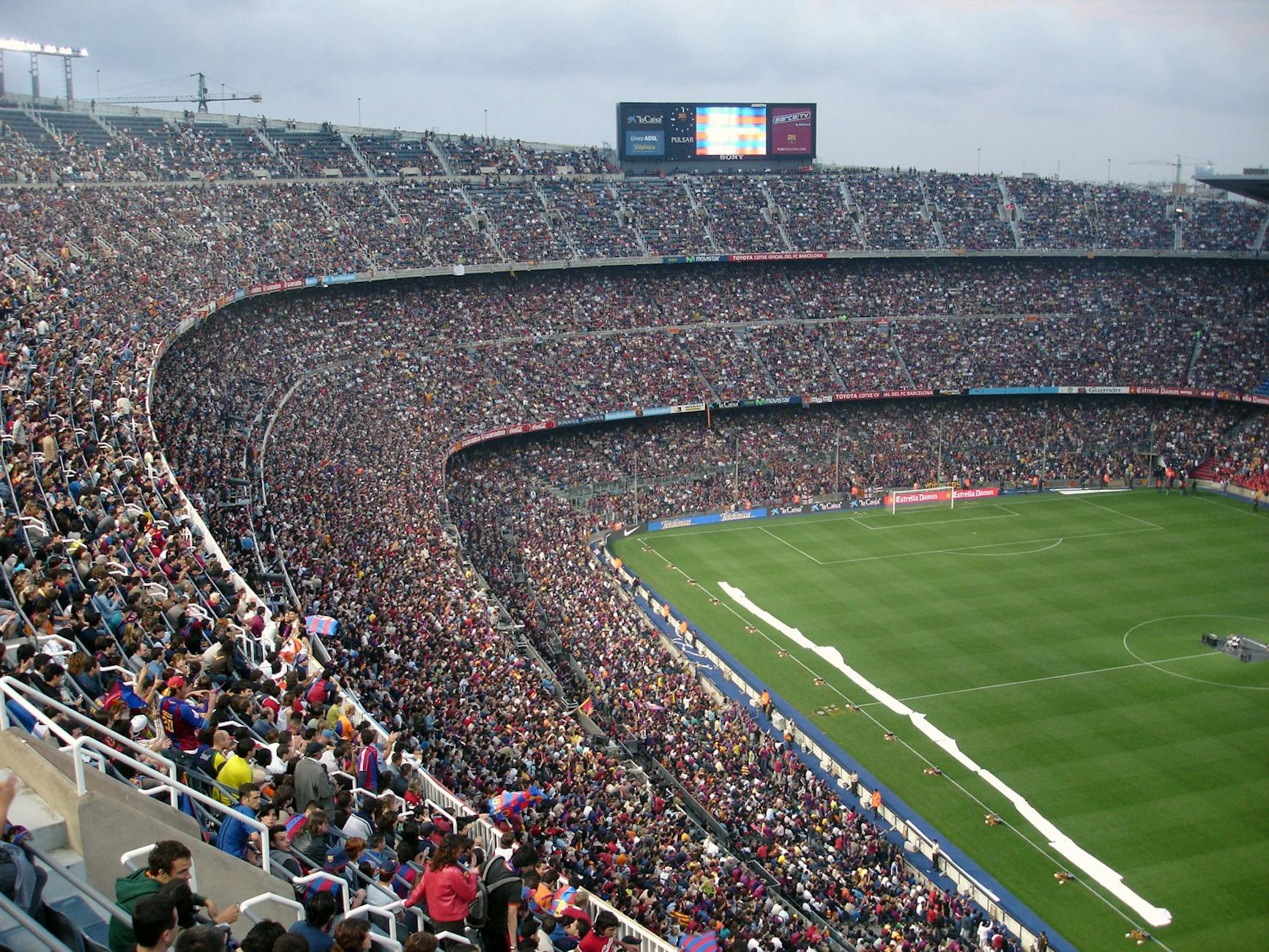
Photo by Pixabay on Pexels
Soccer touches nearly every country on Earth, yet its organization and audience vary dramatically by region. With the 2026 FIFA World Cup on the horizon, the sport is entering a transformative period driven by expansion, commercial growth, and new audiences. This guide walks you through the structures, leagues, and trends that define modern soccer — helping you move from passive viewer to informed follower. Whether you are tracking match predictions, scouting rising stars, or trying to understand why formats changed for 2026, you will find practical answers here.
Is Soccer Really the World's Most Popular Sport?
Yes — FIFA estimates that over 4 billion people engage with soccer globally, making it the most followed sport on the planet. The 2026 World Cup final alone is projected to reach 3 billion viewers across broadcast and streaming platforms. No other sport commands comparable geographic reach, crossover fandom, or tournament-scale viewership.
The gap between soccer and its closest competitors is not subtle. The 2023 Cricket World Cup final drew roughly 2.5 billion viewers, while the 2024 Super Bowl averaged about 123 million in the United States — a large U.S. audience, but a fraction of what soccer produces worldwide. According to FIFA's official annual report, the federation counts 211 member associations across six confederations, more than the United Nations. That institutional reach translates into fan infrastructure nearly everywhere humans live.
What makes the dominance more striking is how the sport scales across economic tiers. Soccer thrives in low-income nations, in favelas, in refugee camps, and in suburban American parks. The barrier to entry is a single ball. You can build a career path starting on a dirt lot, as Pelé, Messi, and Ronaldo did. No other sport offers that funnel from informal play to professional glory, and it explains why the World Cup remains civilization's most-watched event every four years.
How Does Soccer Handle the 2026 World Cup Expansion?
The 2026 FIFA World Cup expands from 32 to 48 teams and from 64 to 104 matches, spreading games across 16 host cities in the United States, Canada, and Mexico. According to FIFA's official tournament documentation, the format creates 12 groups of 4 teams, with the top 2 finishers plus 8 best third-place teams advancing to a 32-team knockout round.
The math gets interesting here. With 12 groups of 4, there are 12 third-place teams, but only 8 advance — meaning 4 of 12 third-place teams will be eliminated. Compare that to the 2022 World Cup, where 8 groups of 4 meant only 2 of 8 third-place teams were eliminated. The new format is more forgiving for group-stage underdogs, but the knockout bracket is substantially different from anything fans have tracked before. Goal-stage tiebreakers and point-differentials across this expanded field will require a fresh mental model for predictions.
Here is what the structural change means in practice:
- More matches per host city — venues like MetLife Stadium in East Rutherford and SoFi Stadium in Inglewood will host 8+ matches each, including semifinals.
- New qualification pathways — UEFA gets 16 spots (up from 13), AFC gets 8.5 (up from 4.5), and CAF gets 9 (up from 5), per Wikipedia's World Cup qualification overview.
- Longer tournament window — the event runs June 11 to July 19, 2026, extending the typical 30-day footprint by nearly two weeks.
- Three-nation logistics — visa, currency, and travel friction will test fans who attempt to follow their team across borders.
Soccer's governing bodies have argued that expansion democratizes the sport. Critics counter that the group stage loses drama when more spots are guaranteed. Either way, the betting markets, the fantasy leagues, and the prediction models all need to adapt. To learn more about how analysts are recalibrating, see our [Internal Link: World Cup 2026 prediction frameworks].

Photo by Quyn Phạm on Pexels
What About Soccer's Growth in Unexpected Markets?
Soccer's fastest-growing audiences are in India, where the Indian Super League averaged 23,000+ fans per match in 2024, and Saudi Arabia, where the Saudi Pro League signed stars like Cristiano Ronaldo, Neymar, and Karim Benzema as part of its Vision 2030 initiative. The United States also saw registered players climb to 4,186,778 in U.S. Soccer's 2024 audit, a record high.
The Saudi Pro League deserves a closer look because it represents a different growth model. Instead of developing talent from scratch, the Public Investment Fund (PIF) — Saudi Arabia's sovereign wealth fund — has used player salaries that dwarf European offers to attract established stars. Al Hilal reportedly offered Kylian Mbappé €700 million in 2023 before he signed with Real Madrid. Whether this strategy builds a sustainable league or simply stages a celebrity exhibition remains an open question. Early TV ratings in MENA regions have been strong, but European viewership has been mixed.
The Indian Super League tells a different story. ISL clubs operate under salary caps that prevent superstar signings, so growth is driven by broadcast deals, stadium attendance, and grassroots participation. India's 1.4 billion population makes even modest conversion rates significant. Mumbai City FC and Bengaluru FC have invested heavily in youth academies, and the AIFF (All India Football Federation) has pushed club licensing standards closer to AFC requirements.
The United States, meanwhile, has quietly become one of the most commercially valuable soccer markets in the world. MLS's Apple TV Season Pass reportedly exceeded 2 million subscribers by mid-2024, and the league's 30th franchise — San Diego FC — is set to debut in 2025. The NWSL signed a $240 million broadcast deal with CBS, ESPN, Amazon, and Scripps in 2024. For a deeper look at how women's leagues are scaling, see our [Internal Link: NWSL growth and investment analysis].
Where Does Soccer Still Fall Short?
Soccer's biggest structural weaknesses are financial — the gender pay gap between men's and women's World Cup prize money, match-fixing vulnerabilities in lower-tier leagues, and fixture congestion that drives injury rates. FIFA's 2024 player welfare report acknowledged that FIFPro documented a 27% rise in hamstring injuries during congested 2023-2024 seasons across Europe's top five leagues.
The prize money gap is the most visible problem. FIFA paid $440 million to men's World Cup teams in 2022, while the 2023 Women's World Cup distributed just $110 million — a 4:1 ratio despite the men's tournament generating roughly $6 billion in revenue (per FIFA's published financial reports). Athlete Ally and other advocacy groups have pressed FIFA to equalize prizes by 2027, but the federation has committed only to a "significant increase" without a specific timeline. As the FIFPro player union statement put it, "the workload problem is not theoretical — it is on every MRI scan we review."
Fixture congestion deserves equal attention. UEFA's expanded Champions League format (36 teams, 8 matches each in the league phase) added 64 games to the European calendar starting in 2024-2025. The Club World Cup in 2025 will add 7 more matches for participating clubs. Players like Rodri and Erling Haaland have publicly warned that the schedule is unsustainable. The data backs them up: the Premier League alone reported a 19% increase in soft-tissue injuries during the 2024-2025 season compared to the prior campaign.
Match-fixing remains a quieter but persistent threat. INTERPOL's 2024 operation targeting illegal betting flagged 1,300 suspicious matches across 100 countries, with lower-division leagues in Southeast Asia and Latin America most exposed. Until national federations receive consistent funding for integrity units, the structural risk remains.
For actionable advice on how fans can identify manipulated fixtures, see our [Internal Link: match integrity and responsible betting guide].

Photo by Omar Ramadan on Pexels
Should You Dive Deeper Into Soccer Today?
Absolutely — the 2026 World Cup will be the largest and most accessible tournament ever, with matches across 16 cities and 11 U.S. metropolitan areas. Goal Moments provides daily match predictions, tactical breakdowns, and player stat analysis tailored to fans who want context beyond highlights. The best time to start learning is before kickoff.
If you are new to soccer, here is a practical starter sequence:
- Pick a club or national team to follow — emotional investment makes the tactical details stick. The Premier League, La Liga, and Bundesliga are the most accessible for English-speaking audiences.
- Learn the four core positions — goalkeeper, defender, midfielder, forward — and watch how they interact during a single match. Position numbering (4-3-3, 4-2-3-1) describes the defensive shape, not just the lineup.
- Understand the three points system — 3 for a win, 1 for a draw, 0 for a loss. Goal difference is the standard tiebreaker, followed by goals scored.
- Follow a tactical analyst — outlets like The Athletic, Tifo Football, and Goal Moments's tactic breakdowns explain formations in plain language.
- Track injuries and suspensions — these move betting lines and starting XIs more than any single tactical decision.
Soccer rewards patience. The first five matches of following a new league feel like noise; by the twentieth, patterns emerge. By the time the 2026 World Cup kicks off on June 11, you will want to know why Spain's high press works, why Brazil's fullbacks invert into midfield, and why the United States men's team shifted to a 4-3-3 under Gregg Berhalter. Goal Moments covers all of it, with the kind of specificity that casual broadcasts skip over.
Want
Thank you for reading. We hope you found this article thoughtful and inspiring.