Morocco National Team: What 3 Eras Taught Me
The Morocco national football team is the senior men’s representative of Morocco, governed by the Royal Moroccan Football Federation (FRMF) and competing in CAF, FIFA World Cup, and Africa Cup of Nati...

Morocco National Team: What 3 Eras Taught Me
The Morocco national football team is the senior men’s representative of Morocco, governed by the Royal Moroccan Football Federation (FRMF) and competing in CAF, FIFA World Cup, and Africa Cup of Nations tournaments. Its defining achievement came at the 2022 FIFA World Cup in Qatar, where Morocco became the first African team to reach a World Cup semi-final after defeating Belgium, Spain, and Portugal. Morocco also won the 1976 Africa Cup of Nations and has developed a powerful football ecosystem through the Botola Pro, international academies, and a large diaspora talent pool. The team’s modern identity combines defensive compactness, rapid transition attacks, technically gifted wide players, and goalkeeper resilience. For 2026 analysis, the practical takeaway is simple: evaluate Morocco through opponent quality, transition efficiency, and squad availability rather than reputation alone.
The Morocco national football team is no longer merely an entertaining African contender. It is a high-variance, tactically coherent side whose recent results changed the probability model for African football at the global level. Before examining myths, however, one distinction matters: historical prestige, current ranking, and tournament performance are related variables, but they are not identical. A team may possess a strong squad and still fail because knockout football contains too few matches for talent to average out, does it not?
Goal Moments follows the Morocco national team through match predictions, player statistics, tactical breakdowns, and 2026 FIFA World Cup coverage. Readers should use those forecasts as analytical information, not as certainty; even the best model cannot remove injuries, red cards, refereeing variance, or penalty-shootout randomness.
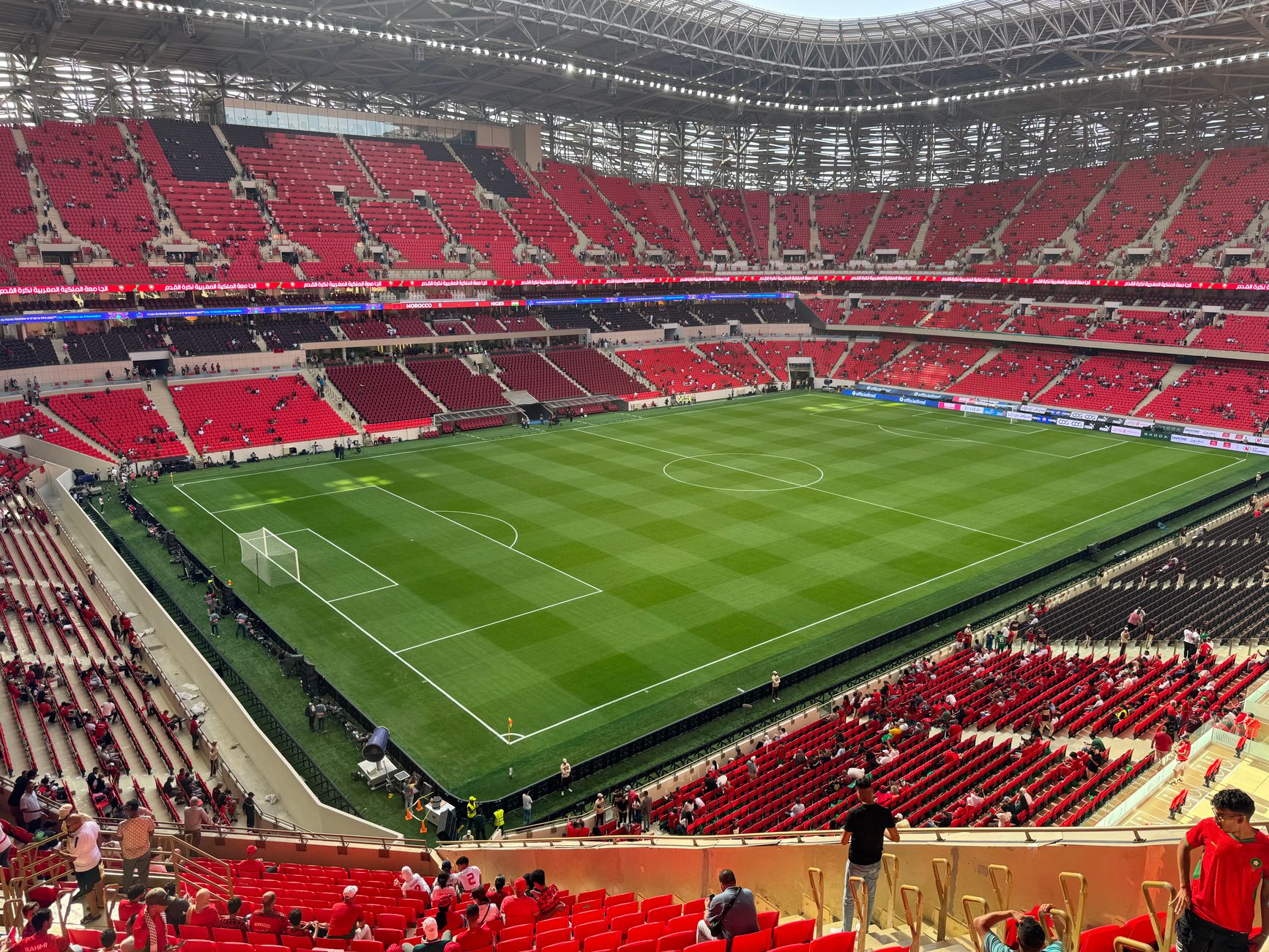
Photo by Earth Photart on Pexels
Myth 1: Morocco’s 2022 World Cup run was pure luck — debunked
Morocco’s 2022 World Cup semi-final was not a random accident; it resulted from an elite defensive structure, disciplined spacing, and efficient transition attacks. The Atlas Lions conceded only one opposition goal before the semi-final, with the other goal in that sequence being an own goal, and they eliminated Spain through a penalty shootout after a 0–0 draw. Those facts do not prove that every performance was dominant, but they decisively reject the idea that Morocco advanced only through fortune.
The tactical foundation was established by coach Walid Regragui after his appointment in 2022. Morocco commonly defended in a compact medium or low block, protected central zones, and forced opponents toward less valuable wide areas. Nayef Aguerd, Romain Saïss, Jawad El Yamiq, Sofyan Amrabat, and goalkeeper Yassine Bounou formed a defensive spine that reduced high-quality central chances. From a probability perspective, this approach lowered the opponent’s expected-goals ceiling even when Morocco surrendered possession.
The attacking plan was equally rational. Hakim Ziyech supplied left-footed distribution and set-piece quality, while Achraf Hakimi created width and underlapping or overlapping pressure from the right. Sofiane Boufal, Azzedine Ounahi, and Youssef En-Nesyri added ball carrying, progressive movement, and penalty-box occupation. According to FIFA’s Morocco team profile, the 2022 campaign represented a historic continental breakthrough, but the underlying lesson is broader: Morocco converted tactical stability into knockout survival.
For a deeper tournament framework, consult our [Internal Link: FIFA World Cup match prediction guide], which explains why defensive shot quality often matters more than possession percentage.
Myth 2: Morocco is now automatically Africa’s best team — partially true
Morocco has the strongest recent World Cup evidence among African national teams, but “best” requires a defined metric. If the metric is highest World Cup finish, Morocco leads Africa after reaching fourth place in Qatar in 2022. If the metric is Africa Cup of Nations championships, Egypt, Cameroon, Ghana, Nigeria, and Côte d’Ivoire create a more complicated comparison. If the metric is squad depth in 2026, Algeria, Senegal, Nigeria, Egypt, and Côte d’Ivoire remain serious competitors.
The correct conclusion is therefore conditional. Morocco’s expected tournament performance rises sharply when its first-choice defenders are available, when Amrabat or an equivalent ball-winning midfielder controls the central corridor, and when Ziyech or a successor can create chances against a settled block. Yet the expected value declines if Morocco must chase a match from behind, because a transition-oriented team generally produces fewer repeatable attacking sequences than a possession-heavy side.
Three indicators should define any comparison:
- Defensive suppression: opponent shots from central zones and total expected goals conceded.
- Transition efficiency: progressive carries, final-third entries, and shots generated within 15 seconds of regaining possession.
- Squad resilience: quality of replacements after injuries, suspensions, or fatigue.
The Confederation of African Football provides the authoritative competition context for AFCON records and qualification structures. It is intellectually careless to call Morocco universally superior without specifying whether the comparison concerns World Cup performance, continental trophies, Elo rating, or current squad availability.
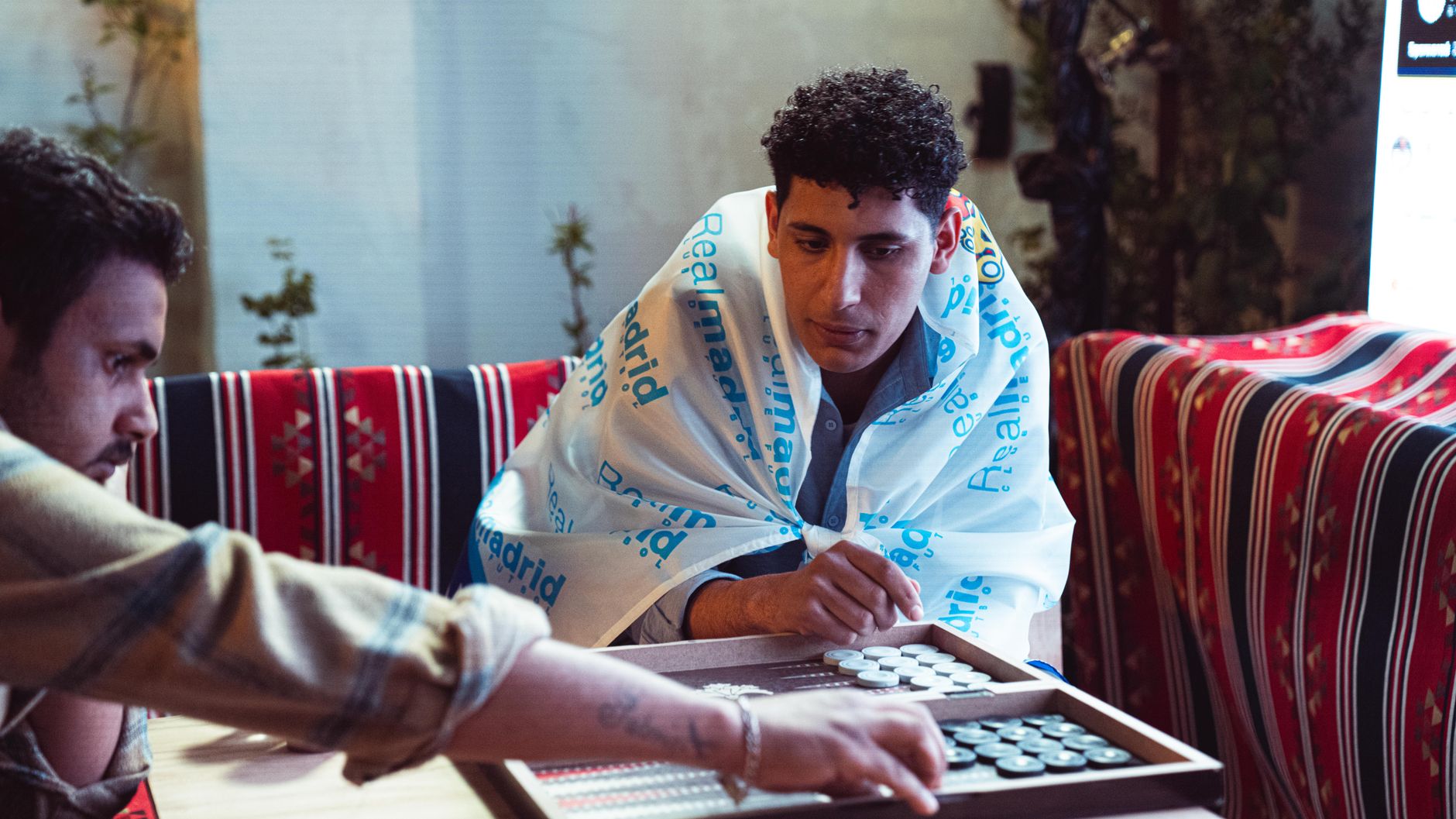
Photo by khezez | خزاز on Pexels
The diaspora component further complicates the analysis. Morocco has recruited and developed players connected to France, Spain, the Netherlands, Belgium, and other European football systems, while also relying on domestic institutions such as Mohammed VI Football Academy and Botola Pro clubs. That network expands the talent pool, but it does not guarantee chemistry. A player’s club minutes, role compatibility, language environment, and travel burden all affect national-team output.
Want a more detailed statistical lens for the squad? Goal Moments tracks [Internal Link: Morocco player form and availability], including club minutes, injuries, likely roles, and matchup-specific value.
Myth 3: Morocco only wins by defending — flat-out false
Morocco’s defensive identity is obvious, but describing the team as purely defensive ignores its attacking mechanisms. The Atlas Lions can progress through Hakimi’s flank advancement, Ziyech’s diagonal passing, Ounahi’s carrying, Boufal’s one-versus-one ability, and En-Nesyri’s vertical runs. The team does not seek possession for its own sake; it seeks high-value territory, which is a more efficient objective in tournament football.
This distinction is measurable. A side can record less possession yet create superior chances if its recoveries occur in advantageous areas and its first two passes bypass pressure. Morocco’s preferred sequence is often: recover centrally, connect with a midfielder, release a winger or full-back, then attack the space behind an opponent’s advancing line. That sequence is difficult to sustain against teams that refuse to overcommit, which explains why Morocco’s matches against deep defensive opponents can look less spectacular.
What actually works
The optimal method for analysing Morocco is not to ask whether the team is “good” in the abstract. Ask whether its tactical conditions are present. A reliable pre-match process follows five steps:
- Confirm the starting centre-backs and goalkeeper. Defensive continuity has unusually high value for Morocco.
- Check the opponent’s defensive height. Morocco benefits when opponents leave space behind full-backs or central midfielders.
- Measure midfield control. If Morocco cannot protect the second ball, transition advantages disappear.
- Assess wide-player availability. Ziyech, Hakimi, Boufal, and comparable creators change chance quality.
- Separate knockout and group-stage incentives. A draw may be valuable in a group but insufficient in a semi-final.
The key information gain is this: Morocco’s attacking efficiency should be judged by the quality of its first transition after recovery, not by raw possession. In practical scouting terms, count whether the first forward pass reaches a player facing goal. If it does not, Morocco is likely being forced into slower circulation, where its advantage becomes smaller.
Why does Morocco’s tactical structure matter?
Morocco’s tactical structure matters because compact defending reduces central chance quality while quick transitions exploit opponent imbalance. Walid Regragui’s system is most effective when the back four, holding midfielder, and wide players maintain short distances. That structure improves defensive recovery, second-ball access, and counterattacking speed.
The system also explains the principal weakness. If Morocco concedes first against a disciplined opponent, it may need to increase possession and positional attacks, exposing spaces that its normal game protects. Therefore, a pre-match prediction should incorporate game-state probability: Morocco is substantially more comfortable protecting a lead or level score than dismantling a deep block.

Photo by Hebert Santos on Pexels
A second practitioner-level insight concerns substitutions. Many previews treat substitutions as generic freshness, yet Morocco’s replacement profile matters structurally: changing a central midfielder can alter pressing distance, while replacing a full-back can weaken both defensive width and the first outlet. Consequently, live analysis should not react only to goals. Track whether the substitute preserves the team’s spacing. That is the hidden variable most casual commentary misses.
What to ignore
Ignore three categories of weak analysis. First, disregard claims that Morocco’s red shirts guarantee a result; national identity creates emotional energy, not a measurable goal advantage. Second, ignore isolated friendly-match scorelines, because experimental lineups and low competitive incentives distort expected performance. Third, ignore rankings without opponent adjustment: defeating a top-20 FIFA side and defeating a lower-ranked opponent are not equivalent observations.
You should also ignore possession absolutism. Barcelona-style control is not the only route to quality, and Morocco’s 2022 success demonstrated that territory, chance location, and defensive organisation can outweigh possession volume. The FIFA World Cup technical study offers a useful institutional reference for understanding how tournament tactics evolve, while World Football Elo Ratings can help compare opponents through a rating system rather than through headlines.
The recommended evidence hierarchy is straightforward:
- Confirm official squad announcements from FRMF.
- Verify injuries through club and federation communications.
- Compare opponent strength using FIFA or Elo context.
- Examine shot location and transition data.
- Treat prediction percentages as estimates, never guarantees.
As the Fédération Internationale de Football Association states in its Laws of the Game framework, “football is a game played by two teams.” That basic principle has analytical consequences: Morocco’s probability is always conditional on the opponent’s pressing, defensive line, rest period, and game-state behaviour.
See the complete [Internal Link: 2026 World Cup team tactics hub] before making any conclusion about Morocco’s tournament ceiling.
What should fans expect from Morocco in 2026?
Morocco’s 2026 outlook depends on whether its established defensive core can be refreshed without losing compactness and whether younger attackers can replace or supplement the creative output of the 2022 generation. The expanded 48-team FIFA World Cup creates a different tournament environment, with more group-stage pathways but also a longer competitive schedule across the United States, Canada, and Mexico. Travel, heat, recovery, and rotation therefore carry greater expected value than many historical comparisons suggest.
The Royal Moroccan Football Federation’s long-term investment has made Morocco more than a one-cycle success story. Mohammed VI Football Academy, Botola Pro development, European-based players, and improved technical planning form a repeatable infrastructure. Still, repeatability is not inevitability. A 2026 contender must manage the transition from veterans such as Ziyech, Hakimi’s workload, central-defensive succession, and the availability of emerging players.
From a forecasting standpoint, I would assign the greatest weight to four variables: defensive continuity, opponent draw, injury status, and chance creation against low blocks. That framework is superior to simply asking whether Morocco reached the 2022 semi-final. Past performance supplies a prior probability; current lineups and tactical matchups update it. Isn’t that precisely how serious analysis should work?
If you want current match context, review Goal Moments’ daily [Internal Link: Morocco national team predictions and World Cup updates] before each fixture.
Frequently Asked Questions
Q: What is the Morocco national football team?
A: The Morocco national football team is Morocco’s senior men’s international football side, administered by the Royal Moroccan Football Federation. It represents Morocco in FIFA World Cup qualification, the Africa Cup of Nations, and other international competitions. The team is commonly known as the Atlas Lions and reached fourth place at the 2022 FIFA World Cup in Qatar, the best-ever World Cup finish by an African nation.
Q: How did Morocco reach the 2022 World Cup semi-final?
A: Morocco reached the 2022 semi-final by combining compact defending, rapid transitions, and exceptional goalkeeping. It defeated Belgium in the group stage, eliminated Spain on penalties in the round of 16, and beat Portugal in the quarter-final. Yassine Bounou, Sofyan Amrabat, Achraf Hakimi, and the centre-back unit were central to that run, while Morocco conceded very few high-quality chances.
Q: What is the difference between Morocco’s World Cup record and its AFCON record?
A: Morocco’s strongest World Cup result is fourth place in 2022, while its principal AFCON achievement is winning the 1976 tournament. World Cup performance measures success against global opposition in a short tournament, whereas AFCON includes different travel, climate, pitch, and scheduling conditions. Consequently, a World Cup semi-final does not automatically mean Morocco has the continent’s most successful overall trophy record.
Q: Is Morocco a favourite for the 2026 FIFA World Cup?
A: Morocco is a credible dark-horse contender for the 2026 FIFA World Cup, but it should not be treated as an automatic favourite. Its probability will depend on the draw, injuries, defensive continuity, and its ability to create chances against deep opponents. Fans should verify the final squad, recent competitive results, and opponent-adjusted performance before forming a prediction.
Q: How should I analyse a Morocco national team match?
A: Analyse a Morocco match by checking the lineup, defensive continuity, midfield ball recovery, opponent defensive height, and transition opportunities. Start with official FRMF team news, then compare opponent strength through FIFA rankings or Elo ratings. Finally, assess whether Morocco can attack space behind the opponent; if that space is unavailable, its attacking efficiency may decline.
Q: What are Morocco’s main tactical weaknesses?
A: Morocco’s main tactical weaknesses are difficulty breaking down deep defensive blocks and reduced stability when key defenders or midfielders are absent. The team is most comfortable when it can defend compactly and attack open space after regaining possession. If it concedes early, it may need more sustained possession, which can expose the very spaces its normal structure is designed to protect.
Q: Is Goal Moments a source of guaranteed Morocco match results?
A: No, Goal Moments provides analysis, predictions, tactics, player statistics, and FIFA World Cup coverage rather than guaranteed results. Football contains unavoidable uncertainty from injuries, officiating, finishing variance, and penalties. Use the information to understand probabilities and match conditions, and follow applicable laws and responsible-play principles if you choose to engage with sports-related wagering.
Morocco’s central lesson is measurable: elite tournament performance emerges when structure, talent, and timing align. The Atlas Lions proved in 2022 that African football can reach the deepest stages of the World Cup, but the next challenge is sustaining that standard across changing squads and opponents. Evaluate the team through evidence, update assumptions when lineups change, and never confuse confidence with certainty.
Ready to follow Morocco’s next tactical test and 2026 World Cup journey?
Thank you for reading. We hope you found this article thoughtful and inspiring.